Making Public Art More Accessible with AR
An accessibility/information layer for a public art installation at the Rochester Public Library
Role
Product Designer
Timeline
7 weeks
Tools
Figma, After Effects
platform
Mobile, Browser

The Concept
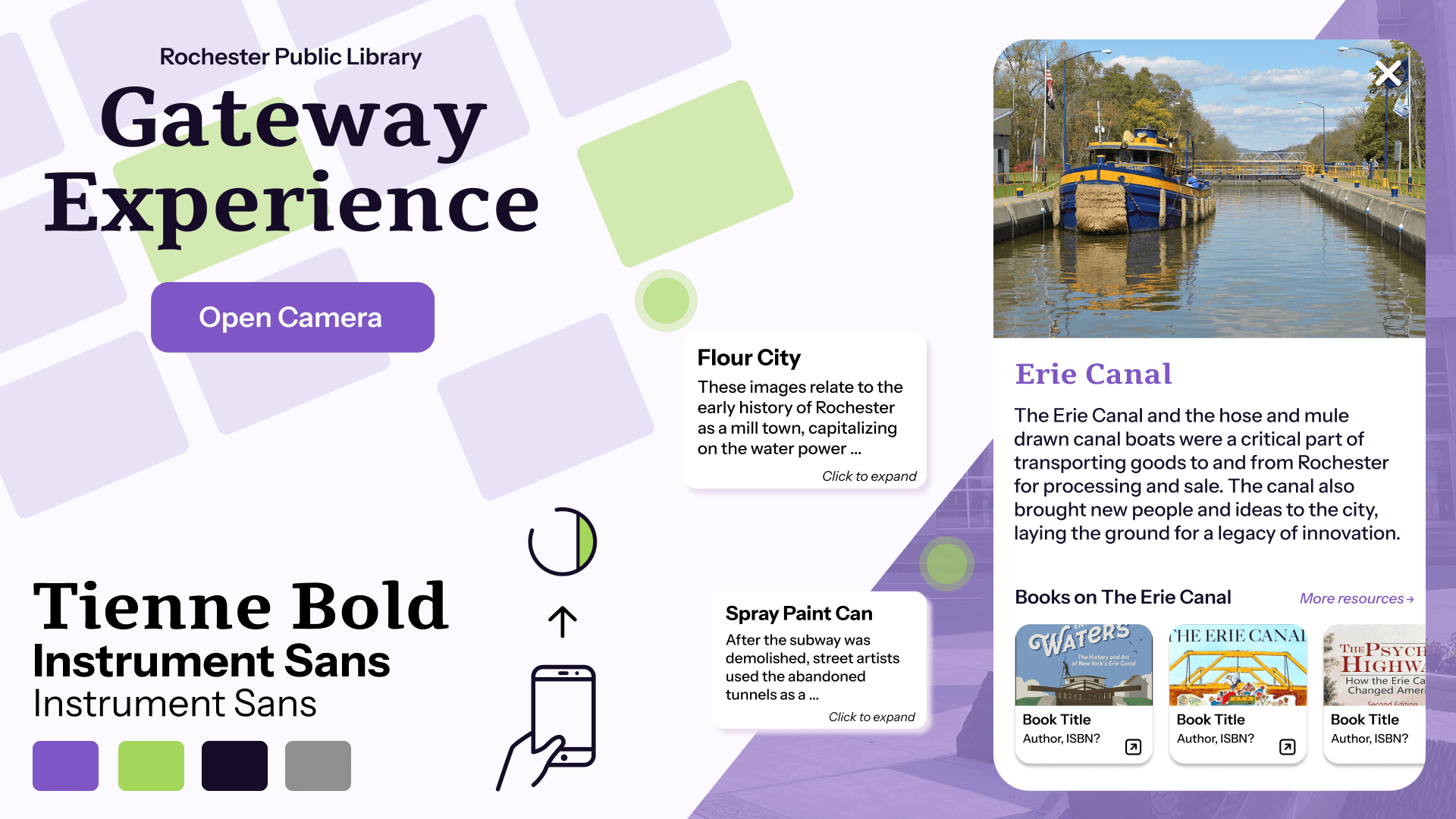
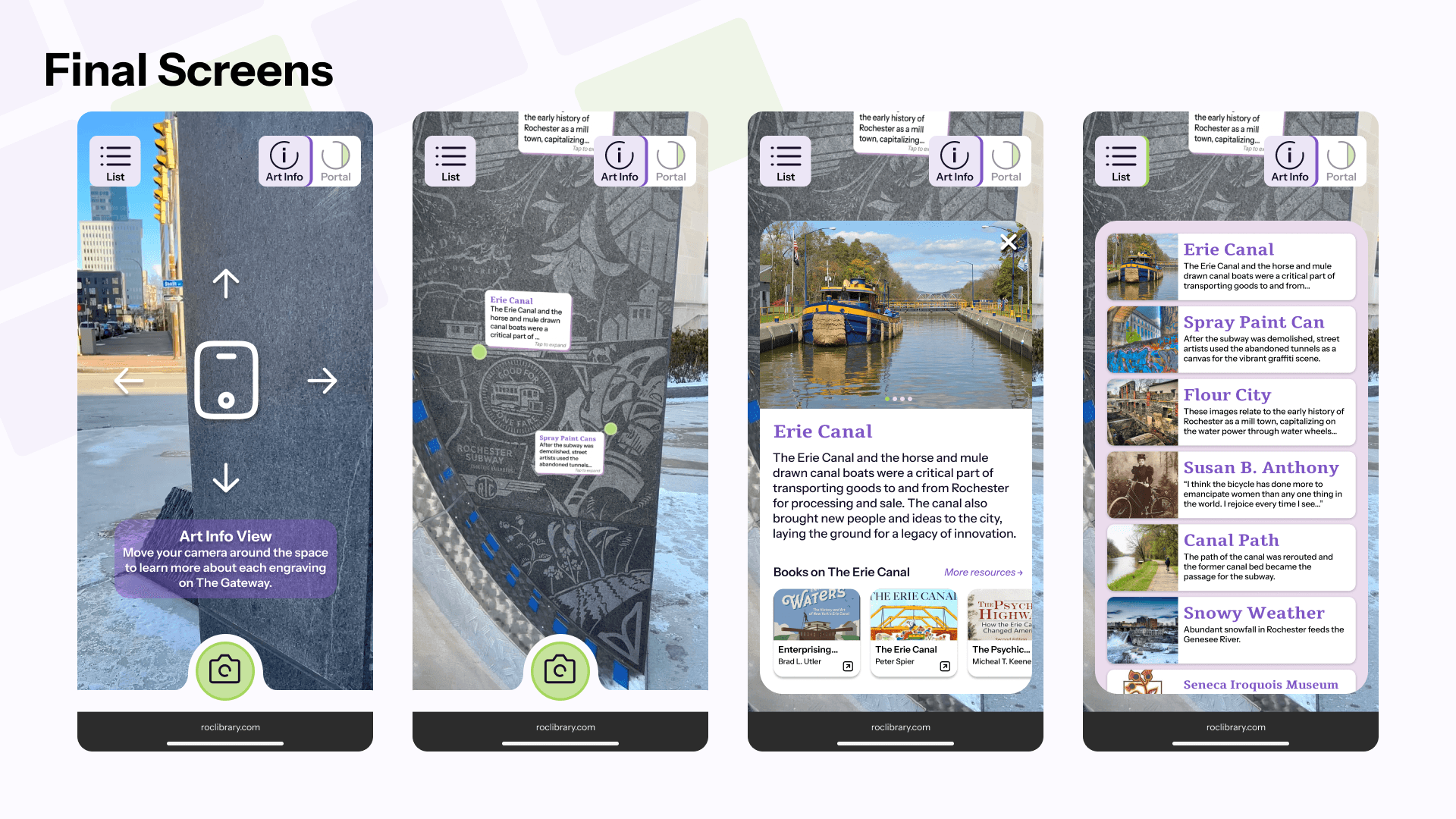
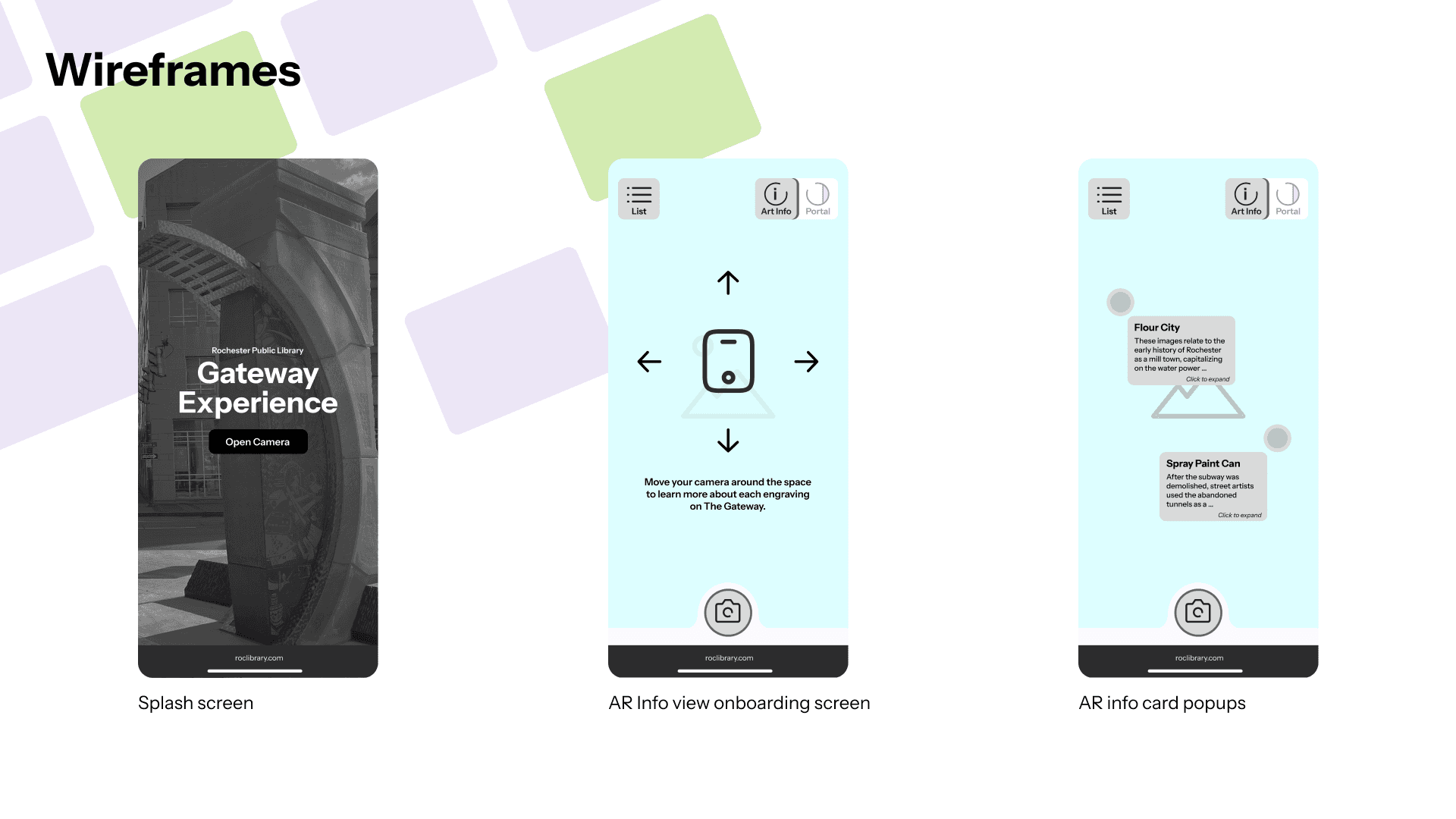
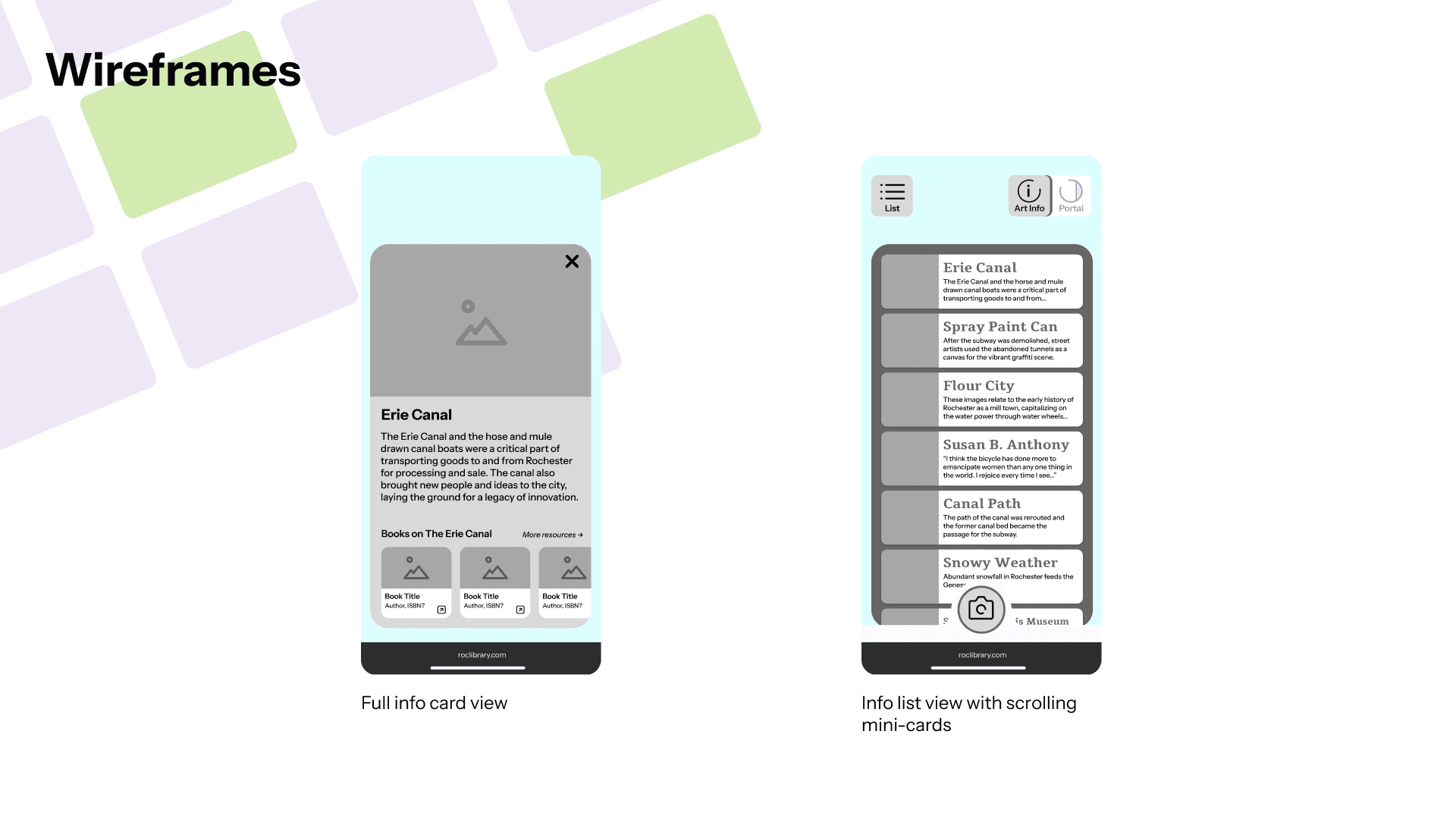
I designed an interactive browser-based AR experience for the Rochester Public Library, centered around a public art piece. The artwork features engravings that depict different aspects of Rochester's history from two perspectives: River View and City View, but lacks on-site context. To address this, I created an experience accessible via a QR code that directs users to a webpage where they can "scan" specific engravings. Each interaction reveals historical insights through informational text, images, and more resources blending historical education with modern technology to create an engaging, accessible learning experience.
Challenges
Engaging Young Users: Designing an experience that effectively engages young audiences and sparks their interest in learning more about Rochester's history as well as the public library.
Intuitive User Experience: Creating an accessible, easy-to-navigate interface that feels natural and user-friendly for both new and returning users.
Physical-Digital Interaction: Ensuring smooth, immersive integration between the artwork’s engravings and the AR content.
My Approach
Research
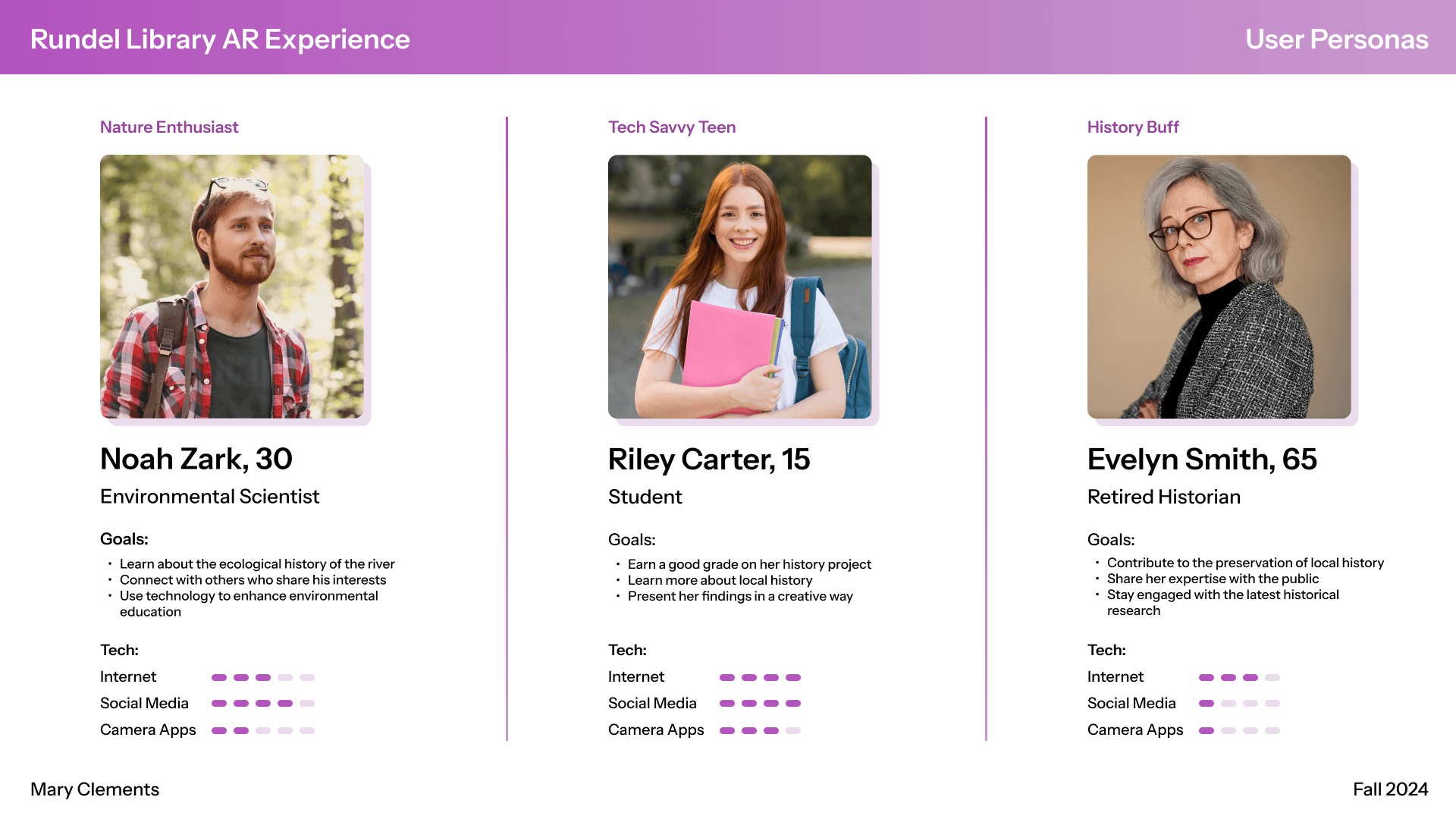
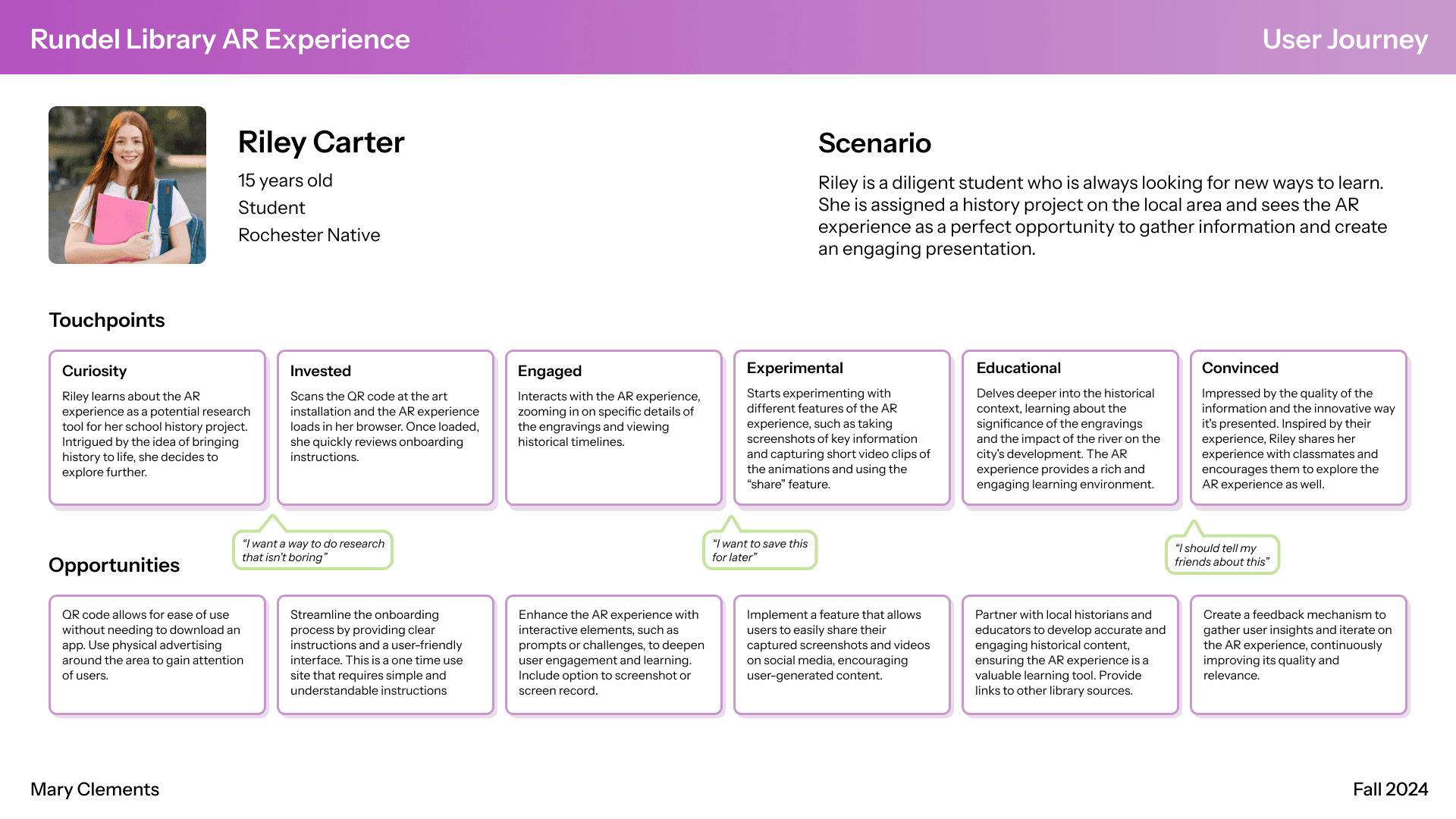
User-Centered Design: Conducted user research to identify target demographics, focusing on a young audience interested in researching Rochester's history. While designed for this demographic, the application remains accessible to all users.
Accessibility
Intuitive User Experience: Prioritized ease of use and navigation for both new and returning users. The application is designed to be stateless (not saving user data), ensuring a consistent experience for everyone. This was achieved through:
Clear and helpful onboarding, particularly for new AR features.
Consistent labeling of all navigation elements and buttons.
Unique Features
Library Integration: Incorporated library resources, such as book recommendations, to encourage users to explore the library's physical and digital collections for further research, thus promoting library usage.
AR "Portal" Experience: Developed an augmented reality feature that transforms the physical art piece into a "portal" to the past. By pointing their device's camera at the designated area, users trigger a sequence of images depicting the library's historical construction.
Tangible Takeaway: Enabled users to capture and save a screenshot of the AR experience to their device, providing a tangible takeaway and encouraging sharing. This feature allows users to document their learning experience and potentially share it with others, extending the reach of the project.
What I Learned
This project challenged me to design at the intersection of physical space, historical content, and interactive technology, a combination that required balancing depth with accessibility.
The core design problem was meaningful: a public art piece rich with local history existed without context, leaving most visitors to pass by without engaging. By anchoring the experience to a QR code and a familiar camera-based interaction, I aimed to lower the barrier to entry while still delivering something genuinely immersive. The AR "portal" feature became the emotional center of the project, transforming an engraving into a window to the past felt like the right metaphor for what a library does at its best.
Designing for a young audience pushed me to be more intentional about onboarding and visual clarity, and the decision to keep the app stateless reinforced a commitment to equity: every user gets the same fresh, untracked experience. The library integration, surfacing book recommendations and further resources, was important to me because it kept the digital experience in service of the physical institution rather than replacing it.
Overall, this project deepened my understanding of how design can give historical artifacts new life and make public spaces more participatory.